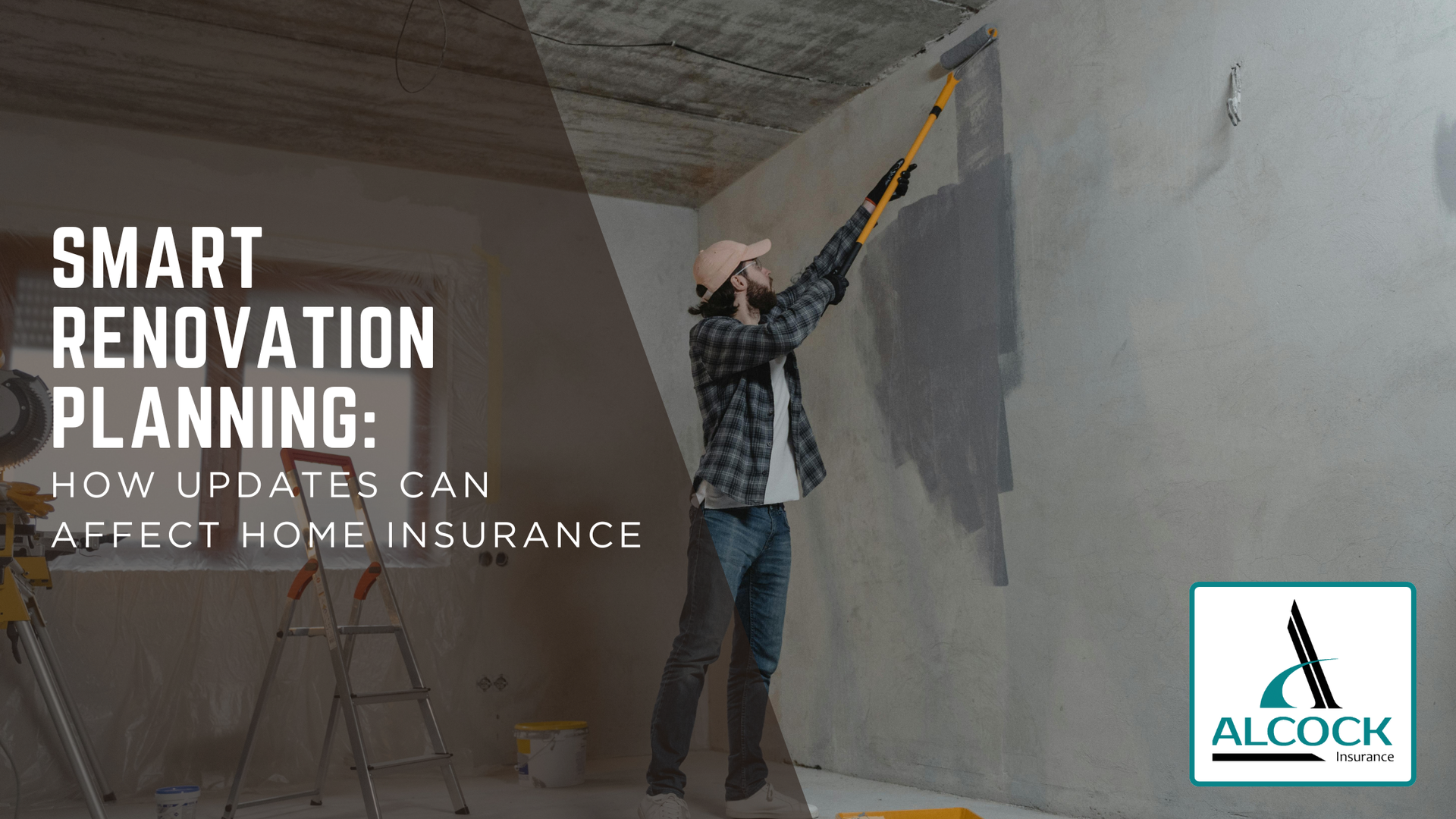
Smart Renovation Planning: How Updates Can Affect Home Insurance
May 14, 2026

Home renovations can improve comfort, function, and property value, but they can also change how your home should be insured. For homeowners in Greenville, NC, planning ahead before a remodel can help avoid coverage gaps, underinsured improvements, claim issues, and unexpected policy changes after the work is done.


Why Renovations Matter To Home Insurance

Home insurance is based partly on the characteristics and replacement cost of the home. When you renovate, expand, upgrade, or change major systems, the home’s risk profile may change. That can affect coverage limits, premium, underwriting, and what documentation the insurer may need.


The direct answer is this: home renovations can affect home insurance by increasing the estimated cost to rebuild, changing property values, reducing certain risks, adding new exposures, or requiring policy updates before, during, or after construction. Some upgrades may qualify for savings, while others may increase the amount of coverage needed.


In our work with clients, a common issue we see is that homeowners complete a major renovation but never update their insurance policy. If a claim happens later, the policy may still reflect the home before the improvements were made.


Renovations Can Increase Replacement Cost

One of the biggest insurance concerns is replacement cost. This is the estimated amount needed to rebuild the home with similar materials and quality after a covered loss. It is not the same as market value, purchase price, or tax assessment.

If you add square footage, upgrade finishes, renovate a kitchen, remodel bathrooms, finish a bonus room, or add custom features, the cost to rebuild the home may increase. Your dwelling limit should be reviewed to make sure it reflects the improved property.


Examples of renovations that may increase replacement cost include:

  • Kitchen remodels
  • Bathroom upgrades
  • Room additions
  • Finished basements or bonus rooms
  • Custom cabinetry
  • New flooring
  • Luxury countertops
  • Built-in shelving
  • High-end lighting
  • Outdoor living spaces
  • Detached garages or workshops


A policy with an outdated dwelling limit may not provide enough protection if the home is later damaged by fire, storm, or another covered event.


Some Updates May Improve Insurability

Not every renovation increases risk. Some updates can make a home more attractive to insurers because they reduce the chance of future claims.


Insurance-friendly upgrades may include:

  • New roof
  • Updated electrical system
  • Updated plumbing
  • New HVAC system
  • Water shutoff devices
  • Security system
  • Monitored smoke alarms
  • Storm-resistant materials
  • Improved drainage
  • Fire-resistant materials
  • Reinforced garage doors
  • Updated handrails and stairs


For example, replacing an aging roof may help reduce wind or water intrusion risk. Updating old wiring may reduce fire concerns. Installing leak detection or water shutoff devices may help limit water damage.


For homeowners near East Carolina University or along the Tar River area, weather, age of the home, and maintenance history can all affect how an insurer views the property. Documenting improvements can be helpful during renewal or underwriting review.


Renovations During Construction Need Special Attention

The construction period itself creates risk. Contractors, tools, exposed walls, open roofs, temporary wiring, and unfinished work can increase the chance of loss. A standard home insurance policy may not automatically cover every construction-related exposure.


Before work begins, ask your insurance professional whether your current policy is enough during the renovation. Larger projects may require a builders risk policy or a renovation endorsement.


Important questions include:

  • Is the home occupied during construction?
  • Will part of the roof or exterior be open?
  • Are materials stored on site?
  • Are contractors using temporary power?
  • Is the project structural?
  • How long will the work take?
  • Will the home be vacant during renovation?
  • Are detached structures being added?
  • Is a permit required?
  • Are subcontractors involved?


A small cosmetic update may not create major insurance concerns. A major structural remodel is different.


Contractor Insurance Matters

Hiring the right contractor is part of protecting your home. Before work begins, ask contractors for proof of insurance. This may include general liability insurance and workers’ compensation coverage.


Contractor insurance can matter if a worker is injured, property is damaged, or the contractor causes a loss during the project. Do not rely only on a verbal promise that coverage exists. Request certificates and review them before work starts.


A common mistake is hiring an uninsured or underinsured contractor to save money. If something goes wrong, the homeowner may face costs or disputes that could have been avoided with better documentation.


Also confirm whether the contractor uses subcontractors and whether those subcontractors carry their own coverage.


Permits And Code Compliance Can Affect Claims

Some renovations require permits and inspections. Skipping permits can create problems later if work is unsafe, incomplete, or not up to code. It may also create issues when selling the home or filing a claim.


Insurance companies may ask whether work was professionally completed and permitted, especially after a fire, water loss, structural issue, or electrical problem. If unpermitted work contributed to damage, the claim may become more complicated.


Homeowners should keep:

  • Permits
  • Inspection approvals
  • Contractor invoices
  • Material receipts
  • Before-and-after photos
  • Warranty documents
  • Engineering reports, if applicable
  • Updated floor plans or square footage records
  • Good records can help show what was done, when it was completed, and who performed the work.


Home Additions And Detached Structures Need Coverage Review

Adding a room, garage, porch, deck, shed, workshop, or outdoor kitchen can change the insurance needs of the property. Some additions increase the dwelling limit. Others may fall under other structures coverage.


Other structures coverage often applies to detached buildings or structures, such as sheds, fences, detached garages, and workshops. This coverage may be a percentage of the dwelling limit, but that default amount may not be enough if you add a costly detached structure.


If you build or upgrade a detached structure, notify your insurance professional and confirm whether the limit is adequate.


Pools, Trampolines, And Outdoor Features Can Increase Liability Risk

Some renovations add liability exposure. Pools, hot tubs, trampolines, decks, outdoor kitchens, fire pits, and play structures may increase the chance of injury claims.


If you add these features, review personal liability limits and consider whether an umbrella policy makes sense. The insurer may also have safety requirements, such as fencing, locked gates, covers, handrails, or other protective measures.

For homeowners in Greenville, NC, liability planning is important if the home regularly has guests, children, pets, or neighborhood visitors.


Renovations Can Affect Personal Property Coverage

A renovation may involve new furniture, appliances, electronics, tools, fixtures, or valuable items. Some of these may be considered part of the dwelling, while others may be personal property.


If you buy expensive furnishings, artwork, collectibles, jewelry, or electronics after a remodel, your personal property limit may need review. Valuable items may need scheduled coverage if they exceed standard policy limits.


Do not assume the home remodel automatically updates coverage for everything inside the home.


When To Notify Your Insurance Agency

You do not need to report every small repair, but larger renovations should be discussed before work begins and again after completion.


Notify your insurance professional when you:

  • Add square footage
  • Remodel a kitchen or bathroom
  • Replace the roof
  • Update electrical or plumbing
  • Finish a basement or bonus room
  • Add a deck, pool, or detached structure
  • Install high-value materials
  • Make structural changes
  • Leave the home vacant during work
  • Hire contractors for a major project
  • The goal is to keep the policy aligned with the home as it changes.


Conclusion

Smart renovation planning includes more than design choices, contractor schedules, and budgets. Home updates can affect replacement cost, property limits, liability exposure, construction risk, underwriting, and potential discounts. For homeowners in Greenville, NC, the best approach is to review insurance before major work begins, document improvements carefully, confirm contractor coverage, and update the policy after the renovation is complete.


At Alcock Insurance, we are committed to offering our clients a wide range of comprehensive and affordable insurance policies. We go above and beyond to ensure that we meet your unique needs with tailored solutions. To find out more about how we can assist you, please reach out to our agency at (252) 353-1700 or CLICK HERE to request a free, no-obligation quote.


Disclaimer: The content provided in this blog is for informational purposes only and should not be considered professional advice. For personalized guidance, it is important to consult with a qualified insurance agent or professional. They can offer expert advice tailored to your individual situation and help you make well-informed decisions about your insurance coverage.


Alcock Insurance

 Greenville, NC

 (252) 353-1700

 https://www.alcockinsurance.com/
May 14, 2026
“Full coverage” sounds reassuring, but it can mean different things depending on the policy, vehicle, lender requirements, and coverage choices.
April 27, 2026
Private flood insurance and NFIP flood insurance both help protect against flood loss, but they are not identical products. The best choice depends on the property
April 27, 2026
Business interruption insurance helps replace lost income and certain ongoing expenses when a covered event forces your business to slow down or temporarily stop operating
April 17, 2026
An insurance claim can be denied for many reasons, but the most common ones usually involve coverage gaps, exclusions, missed deadlines, policy conditions, or damage that the policy does not define as a covered loss. A denial does not always mean the insurer is acting unfairly, but it does mean the policy language, the
April 17, 2026
Car insurance policy limits are the maximum amounts your insurer may pay for covered losses under each part of your policy. They matter because even if you have the right type of coverage, low limits can still leave you paying substantial costs out of pocket after a serious accident.
March 19, 2026
FEMA flood zones AE, X, and VE describe different levels and types of flood risk, and they can affect insurance requirements, building considerations, and how you think about protecting your property. AE and VE are generally tied to higher-risk flood areas, while X usually indicates lower or moderate mapped flood risk,
March 19, 2026
Business insurance coverage limits determine the maximum amount your policy may pay for a covered loss, and choosing the wrong amount can leave a business underprotected even when the policy itself is active. The right limits depend on what your business does, what property it owns, how much liability exposure it creat
March 19, 2026
Market value and replacement cost are not the same thing, and confusing them can leave a homeowner dangerously underinsured. Market value reflects what a home could sell for, while replacement cost reflects what it would cost to rebuild the structure after a covered loss.
March 16, 2026
Driving without insurance can trigger much more than a traffic citation. After a ticket or accident, drivers may face fines, license or registration problems, higher future insurance costs, and personal responsibility for damage or injuries that insurance would normally help cover.
February 23, 2026
Workers’ compensation matters because it provides medical care and wage replacement for employees hurt on the job while protecting employers fro m costly lawsuits and unpredictable out-of-pocket losses. In Greenville, NC, the right workers’ comp approach can reduce claim friction, improve return-to-work outcomes, and strengthen overall risk management. Why Workers’ Comp Is A Two-Way Protection System Workers’ compensation is often described as a “mandatory coverage,” but that undersells what it actually does. Properly structured, it’s a built-in safety net for employees and a financial shield for employers. When a workplace injury occurs, workers’ comp helps ensure the employee gets prompt medical treatment and income support. In exchange, the employer typically receives protections that limit an employee’s ability to sue for the injury (depending on the situation and state rules). In our work with businesses, a common issue we see is employers focusing only on cost—premiums and classifications—while overlooking how claims management and workplace practices directly affect the total cost of risk. The most effective workers’ comp programs treat coverage, safety, and claims response as one connected system. How Workers’ Comp Helps Employees After A Work Injury For workers, the value of workers’ comp is immediate and practical. An injury can create sudden expenses, missed paychecks, and uncertainty about returning to work. Workers’ comp is designed to reduce that disruption. Typical benefits may include: Medical treatment related to the injury (doctor visits, prescriptions, surgery, physical therapy) Wage replacement for time missed from work (subject to state formulas and limits) Disability benefits if the injury affects long-term ability to work Rehabilitation services in cases requiring recovery support Death benefits for eligible dependents in fatal incident One of the biggest advantages for employees is access to care without needing to prove someone was “at fault” the way they would in a traditional lawsuit. This no-fault structure is intended to speed up treatment and reduce disputes, though paperwork and reporting still matter a lot. Why Employers Benefit More Than They Realize From the employer side, workers’ comp is not just about compliance—it’s about controlling business risk. Without workers’ comp , a single serious injury can become a financial event that threatens cash flow, staffing, and even business survival. Employers commonly gain: Reduced legal exposure from employee injury lawsuits (with exceptions) Predictable framework for handling injuries and benefits Coverage for medical and wage benefits that would otherwise be paid out-of-pocket Access to carrier and adjuster expertise for claims handling A structured system that supports return-to-work, reducing productivity loss A common misconception is that workers’ comp only “matters” for physically demanding jobs. But slips, trips, strains, repetitive motion injuries, and vehicle-related incidents can affect offices, retail, healthcare, and service businesses as well. Compliance Requirements: What Employers Must Get Right Workers’ comp rules vary by state, industry, and workforce size. Many employers know they “need coverage,” but they don’t always know what compliance actually requires operationally. Key compliance actions often include: Maintaining required coverage based on employee count and business type Posting required workplace notices (where applicable) Properly classifying employees and job roles Reporting injuries promptly and documenting incident details Following return-to-work and light-duty guidelines when recommended Keeping payroll records accurate for audits and renewals Where problems arise: employee misclassification, using incorrect payroll estimates, or relying on “1099” labels without understanding how workers’ comp rules treat subcontracted labor. Misclassification can lead to premium surprises, penalties, or uncovered claims—especially in industries where subcontractors rotate frequently. Why Claims Handling Impacts Your Premiums Premium is only part of the cost. Claims outcomes—how quickly an injury is reported, how treatment is coordinated, and how return-to-work is managed—often drive long-term expense. Employers who tend to perform better over time usually have: A clear injury reporting process (who calls, what forms, what timeline) A designated point person for claim coordination Relationships with occupational clinics or preferred providers (where allowed) A documented return-to-work plan for light duty Ongoing safety training tied to real incident trends If you’ve ever wondered why two similar businesses can have very different workers’ comp costs, claims frequency and claim duration are major reasons. Even small changes—like reporting injuries same-day instead of three days later—can affect medical outcomes and dispute likelihood. Return-To-Work: The Most Overlooked Cost Control Tool Return-to-work programs are often framed as “helping the business,” but they help employees too. The longer an employee is out of work, the harder it can be—physically and emotionally—to re-enter the workplace routine. A thoughtful return-to-work plan can speed recovery and preserve income stability. Effective return-to-work programs typically include: Pre-written light-duty job descriptions (administrative tasks, inspections, training support) A defined approval chain for modified duty Clear communication with the employee about expectations and duration Coordination with the treating provider’s restrictions In many claims, the biggest cost isn’t the first doctor visit—it’s weeks or months of disability time. A return-to-work plan can significantly reduce that risk. Industry-Specific Risks That Often Trigger Claims Workers’ comp exposure depends heavily on what your employees do day to day. Some patterns show up repeatedly across industries: Construction and contracting Falls, tool injuries, lifting strains, ladder incidents Manufacturing and warehousing Repetitive motion injuries, forklift incidents, crush injuries, slips on wet floors Healthcare and caregiving Lifting injuries, needlesticks, patient-related incidents Retail and hospitality Slips and falls, burns, overexertion, back strains Office-based businesses Ergonomic injuries, repetitive strain, slips in common areas, driving for work errands For local employers near Uptown Greenville or along the Tar River corridor, we often see a mix of service businesses, healthcare-adjacent operations, and trades—each with different claim patterns. Knowing your most likely claim types helps you put effort where it actually reduces losses. Common Mistakes That Increase Employer Risk Even well-intentioned employers can accidentally raise risk and costs. Here are issues we see frequently: Waiting too long to report injuries (which increases disputes and treatment delays) No written incident process—so reporting varies by manager Inaccurate payroll estimates that cause audit surprises Treating every injury as “minor” until it becomes a lost-time claim No modified duty options, forcing longer disability periods Misclassifying employees or subcontractors When these problems repeat, employers may also experience higher experience modification factors (where applicable), which can increase premiums over time. Conclusion Workers’ comp matters because it protects employees when injuries happen and shields employers from financial and legal exposure that can escalate quickly. The strongest workers’ comp programs combine compliant coverage with good reporting habits, practical safety efforts, and a return-to-work mindset that reduces claim duration. In Greenville, NC, employers who treat workers’ comp as a system—not just a policy—tend to see more stable costs and better outcomes for their teams. At Alcock Insurance, we are committed to offering our clients a wide range of comprehensive and affordable insurance policies. We go above and beyond to ensure that we meet your unique needs with tailored solutions. To find out more about how we can assist you, please reach out to our agency at (252) 353-1700 or CLICK HERE to request a free, no-obligation quote. Disclaimer: The content provided in this blog is for informational purposes only and should not be considered professional advice. For personalized guidance, it is important to consult with a qualified insurance agent or professional. They can offer expert advice tailored to your individual situation and help you make well-informed decisions about your insurance coverage. Alcock Insurance Greenville, NC (252) 353-1700 https://www.alcockinsurance.com/
Show More