Business insurance can be easy to misunderstand because many coverage assumptions sound logical until a claim actually happens. For owners in Greenville, NC, separating common myths from policy realities can help prevent gaps, improve purchasing decisions, and make coverage easier to manage as the business grows.
Myth: A Business Owners Policy Covers Everything
A
Business Owners Policy, or BOP, can combine several important coverages into one package, but it is not an all-inclusive policy.
A BOP commonly includes:
- Commercial property insurance
- General liability insurance
- Business income coverage
Depending on the insurer, additional endorsements may be available for cyber risks, equipment breakdown, hired and non-owned auto liability, or other exposures.
In our work with business owners, one of the most common misunderstandings is assuming that because several coverages are bundled together, every business risk is automatically included.
That is not the case.
Workers’ compensation, commercial auto, professional liability, flood insurance, and certain cyber or employment-related exposures may require separate policies or endorsements.
Fact: Coverage Should Match Actual Operations
Insurance works best when the carrier has an accurate picture of what the business actually does.
A company that starts as a small retail operation may later add delivery services, online sales, subcontractors, or higher-value equipment.
Each change can affect coverage needs.
For example, a business near Uptown that begins delivering products to customers may create a new auto exposure. A standard BOP does not automatically become a commercial auto policy just because employees begin driving for business purposes.
Owners should update their insurance professional when operations change rather than waiting for renewal.
Myth: General Liability Covers Every Lawsuit
General liability insurance is broad, but it is not designed to cover every type of legal claim.
It typically helps with certain covered claims involving:
- Third-party bodily injury
- Third-party property damage
- Personal and advertising injury
- Legal defense costs
However, exclusions can apply.
For example, general liability usually does not replace professional liability coverage for errors in specialized advice or services.
It also does not typically cover employee injuries, which are generally handled through workers’ compensation.
Understanding the source of a claim is important because different policies respond to different risks.
Fact: Employee Injuries Usually Require Workers’ Compensation
When an employee is injured while performing job duties, general liability is generally not the primary coverage.
Workers’ compensation is designed to help with qualifying work-related injuries and occupational illnesses.
Depending on the circumstances, benefits may include:
- Medical treatment
- Wage replacement
- Rehabilitation
- Certain disability benefits
- Death benefits for eligible dependents
Requirements vary by state and business structure.
Owners should not assume that a small workforce automatically means workers’ compensation is unnecessary.
Myth: Homeowners Insurance Covers a Home-Based Business
Operating from a residence does not automatically make a business exposure part of a homeowners policy.
Homeowners insurance is primarily designed for personal residential risks.
Business equipment, inventory, customer visits, and professional activities may have limited or no coverage.
For example, someone running a consulting, photography, repair, or e-commerce business from home may need additional protection.
Depending on the operation, options could include:
- A home-business endorsement
- Business Owners Policy
- General liability insurance
- Professional liability insurance
- Commercial property coverage
Owners should explain the business activity clearly rather than assuming the residential policy will handle it.
Fact: Property Limits Can Become Outdated
Commercial property values can increase over time.
Businesses often add computers, furniture, tools, machinery, inventory, signage, and improvements without increasing policy limits.
A company that originally insured $75,000 of business property may later own significantly more.
If the limit is too low, a major covered loss could leave the business with insufficient funds to replace everything.
For businesses near areas such as East Carolina University or Arlington Boulevard, expansion can happen gradually enough that owners do not realize how much additional property has accumulated.
A periodic inventory can help identify whether the current limit remains realistic.
Myth: Flood Damage Is Included in Commercial Property Insurance
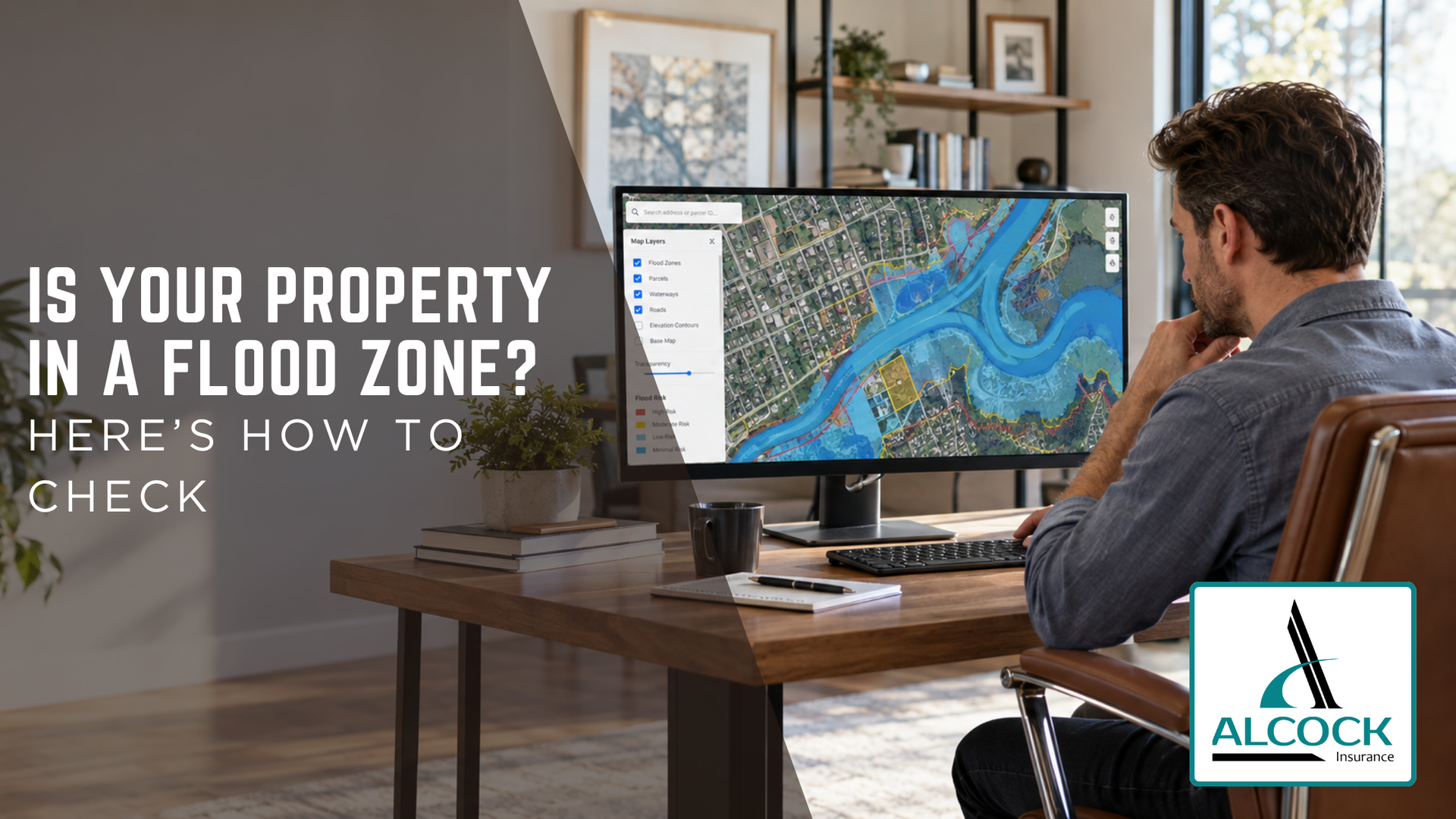
Standard commercial property policies generally do not cover flooding caused by rising water.
Flood insurance is usually separate.
This distinction matters because businesses can suffer major losses to:
- Inventory
- Furniture
- Machinery
- Electrical systems
- Flooring
- Building interiors
Owners should not assume that heavy rain damage automatically falls under a standard property policy.
The cause of the water matters.
Flood risk should be evaluated separately from roof leaks, burst pipes, or other water-related losses that may be treated differently.
Fact: Business Income Coverage Can Be Critical
Property insurance helps repair or replace damaged physical assets, but businesses also need to consider what happens when operations stop.
Business income coverage may help replace qualifying lost income and certain continuing expenses after a covered property loss.
This can help with obligations such as:
- Payroll
- Rent
- Loan payments
- Certain operating expenses
The recovery period can last longer than the physical repair itself.
Permits, supply delays, equipment replacement, and customer disruption can all extend downtime.
Owners should review how long they could realistically operate without normal revenue.
Myth: Personal Auto Insurance Covers Every Business Trip
Ordinary commuting is generally different from commercial vehicle use.
A personal auto policy may not be sufficient when a vehicle is regularly used for:
- Deliveries
- Customer transportation
- Carrying tools or equipment
- Visiting multiple jobsites
- Commercial hauling
- Certain rideshare activities
Business owners should describe vehicle use honestly.
Depending on the exposure, commercial auto insurance or another specialized policy may be necessary.
This is especially important when employees use company vehicles or their own vehicles for business errands.
Fact: Certificates of Insurance Do Not Create Coverage
A certificate of insurance, or COI, summarizes certain policy information at a point in time.
It does not create insurance coverage that does not already exist.
For example, if a contract requires additional insured status, simply typing that requirement into the certificate description does not necessarily satisfy the contract.
The underlying policy or endorsement must actually provide the required protection.
Business owners should review contractual insurance requirements before signing agreements whenever possible.
Myth: Small Businesses Are Too Small for Cyber Insurance
Cyber incidents do not affect only large corporations.
Small businesses can face:
- Ransomware
- Data breaches
- Email compromise
- Payment fraud
- Network interruption
- Customer notification costs
A small company may actually be more vulnerable if it lacks dedicated IT security staff or backup systems.
A traditional BOP may provide limited cyber protection unless specific coverage is added.
Businesses that store customer information, accept electronic payments, or depend heavily on software should review this exposure.
Fact: Higher Liability Limits May Be Needed as the Business Grows
A liability limit that made sense when the business was small may not remain appropriate after revenue, customer volume, assets, or contracts increase.
Larger operations can face larger claims.
Commercial umbrella or excess liability insurance may provide additional limits above certain underlying policies, subject to policy terms.
Owners should consider whether current liability limits reflect:
- Customer traffic
- Contract requirements
- Property values
- Business assets
- Product exposure
- Vehicle use
- Overall lawsuit risk
Growth should trigger an insurance review, not just a marketing or staffing review.
Myth: Filing Every Small Claim Is Always the Best Choice
Insurance is designed to respond to covered losses, but not every minor property incident necessarily needs to become a claim.
Before filing a small claim, compare the repair cost with the deductible.
If the loss is only slightly above the deductible, the potential insurance payment may be limited.
However, liability claims, employee injuries, serious property damage, and incidents involving third parties should generally be handled carefully and reported promptly where appropriate.
The decision should reflect the type of claim and potential exposure, not a blanket rule.
Fact: Annual Reviews Can Prevent Expensive Surprises
Business insurance should not be treated as a one-time purchase.
At least once a year, owners should review:
- Revenue
- Payroll
- Employee count
- Property values
- Equipment
- Inventory
- Locations
- Vehicles
- Services offered
- Contract requirements
For business owners in Greenville, NC, an annual review can help identify operational changes that may otherwise remain invisible to the insurer.
The goal is to keep the policy aligned with the business that exists today.
Conclusion
Business insurance myths can lead owners to overestimate what a policy covers, overlook separate exposures, or carry outdated limits. Understanding how general liability, commercial property, workers’ compensation, business income, commercial auto, cyber coverage, and other policies work together can make insurance decisions more practical and reduce avoidable gaps.
At Alcock Insurance, we are committed to offering our clients a wide range of comprehensive and affordable insurance policies. We go above and beyond to ensure that we meet your unique needs with tailored solutions. To find out more about how we can assist you, please reach out to our agency at (252) 353-1700 or
CLICK HERE to request a free, no-obligation quote.
Disclaimer: The content provided in this blog is for informational purposes only and should not be considered professional advice. For personalized guidance, it is important to consult with a qualified insurance agent or professional. They can offer expert advice tailored to your individual situation and help you make well-informed decisions about your insurance coverage.
Alcock Insurance
Greenville, NC
(252) 353-1700
service@alcockins.com
https://www.alcockinsurance.com/