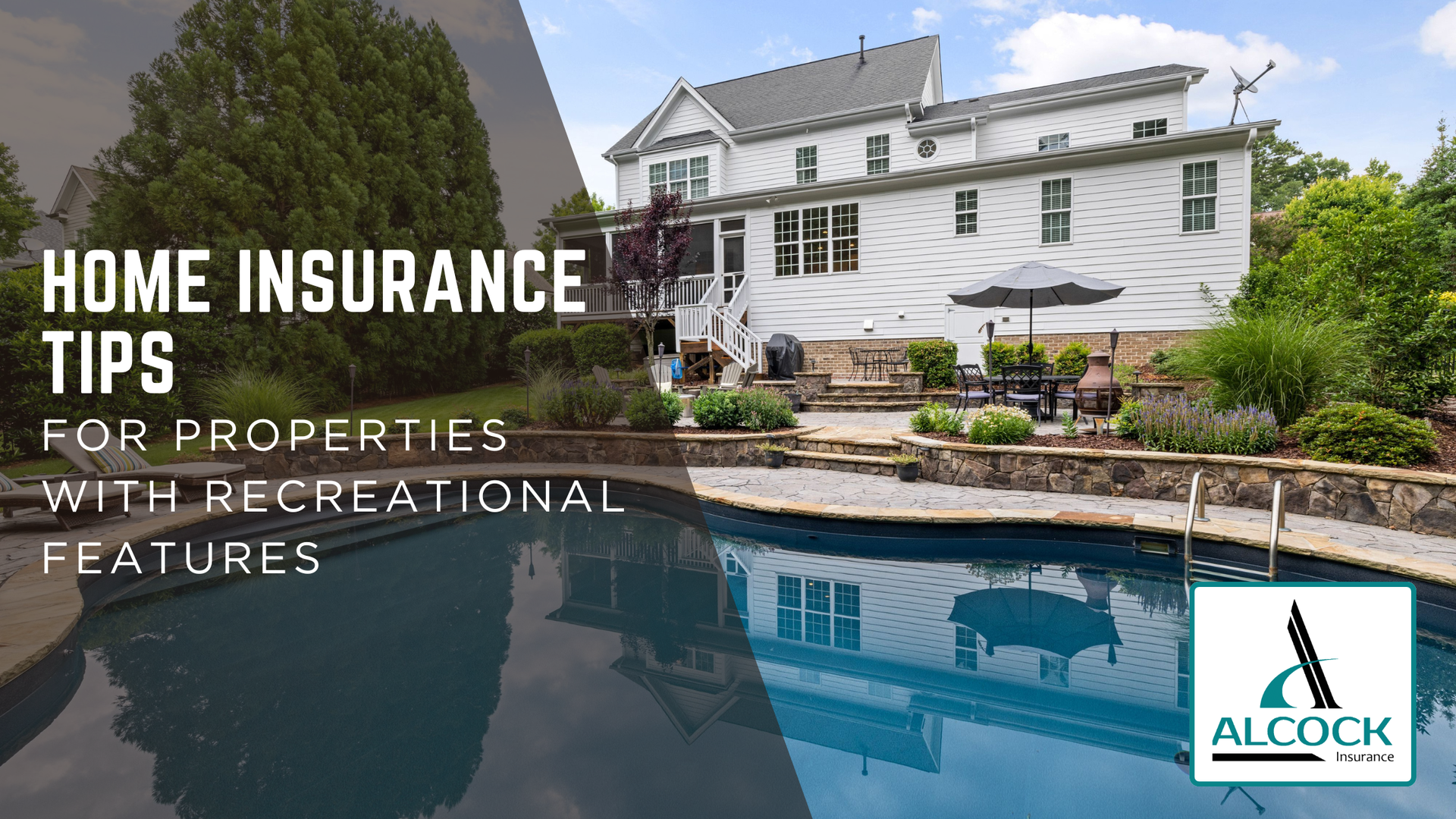
A swimming pool, trampoline, hot tub, playset, or backyard court can make a home more enjoyable while creating additional property and liability exposures. For homeowners in Greenville, NC, these features should be discussed with the insurer before installation so coverage conditions, safety requirements, and potential premium changes are understood.
Tell the Insurer Before Adding a Feature
Homeowners insurance generally combines property protection with personal liability coverage, but recreational features can change how an insurer evaluates the property. The North Carolina Department of Insurance describes homeowners insurance as a package policy covering a range of property and liability risks associated with owning a home.
Contact the insurer before installing or purchasing:
- An in-ground or above-ground pool
- A hot tub or spa
- A trampoline
- A large playset
- A treehouse
- A sports court
- A backyard zip line
- A dock or boat lift
- An all-terrain vehicle
- A detached recreational building
The insurer may request photographs, construction details, permits, fencing information, or proof that the feature meets safety standards. Some companies may accept the feature with no major change, while others may require specific precautions, increase the premium, restrict coverage, or decline the risk.
Failing to disclose a significant feature can create complications during underwriting, renewal, or a claim.
Understand Property Coverage and Liability Coverage Separately
A recreational feature can create two different insurance questions.
Property coverage concerns physical damage to the feature itself. Liability coverage concerns injuries or property damage for which the homeowner may be legally responsible.
For example, a storm might damage a pool enclosure, while a guest could be injured after slipping near the same pool. Those losses would be evaluated under different sections of the policy.
Ask whether the feature is treated as:
- Part of the dwelling
- An other structure
- Personal property
- Permanently installed equipment
- Property subject to a special limit
- An excluded item
A built-in pool, detached pool house, portable hot tub, and removable playset may not all be classified the same way. Classification can affect the applicable coverage limit, deductible, and settlement method.
Review Liability Limits Before Installing a Pool
Pools create significant injury and drowning exposure, including risks involving children who enter without permission. The Insurance Information Institute advises homeowners to notify their insurer when adding a pool and consider higher liability limits or an umbrella policy because of the additional risk.
Standard personal liability limits may be inadequate after a severe injury. Medical care, rehabilitation, lost income, legal defense, and a court judgment can exceed a relatively low limit.
Homeowners with recreational features should evaluate:
- The personal liability limit
- Medical payments to others
- Umbrella insurance eligibility
- Required underlying limits
- Coverage for household members
- Exclusions involving specific activities
An umbrella policy may provide additional liability protection above qualifying home and auto limits. However, the umbrella insurer must also be told about pools, trampolines, watercraft, recreational vehicles, and other significant exposures.
Use Multiple Layers of Pool and Spa Protection
An
insurance policy does not replace physical safeguards. The U.S. Consumer Product Safety Commission recommends multiple layers of protection to prevent children from accessing pools and spas, including barriers, door alarms, covers, and self-closing, self-latching gates.
Practical precautions include:
- Surrounding the pool with a compliant barrier
- Using a gate that closes and latches automatically
- Keeping the latch out of a young child’s reach
- Installing alarms on doors leading to the pool area
- Using an approved safety cover
- Removing or securing above-ground pool ladders
- Keeping rescue equipment nearby
- Providing active adult supervision
- Maintaining clear water and working drains
North Carolina safety guidance has recommended barriers at least four feet high, self-closing and self-latching gates, secured covers, and locked or removed ladders for above-ground pools and spas.
Local building codes or insurer standards may impose additional requirements. Confirm the applicable rules before construction rather than after an inspection reveals a problem.
Treat Trampolines as a Serious Liability Exposure
Trampolines can cause fractures, head injuries, spinal injuries, and falls beyond the jumping surface. Some insurers permit them only when specific safety measures are followed. Others exclude trampoline-related liability or will not insure a property where one is present.
Ask the insurer whether it requires:
- A safety enclosure
- Protective padding
- Ground-level placement
- Restricted access
- Adult supervision
- Removal of ladders when unused
- A higher liability limit
- A signed exclusion
A trampoline exclusion can be especially important. The insurer may issue a homeowners policy while expressly excluding injuries arising from trampoline use. The homeowner would then be responsible for defending and paying a qualifying claim without help from that policy.
Keep the equipment in good condition, follow manufacturer instructions, and do not permit multiple jumpers when the product warns against it.
Check Hot Tub and Spa Requirements
Hot tubs create drowning, burn, slip-and-fall, electrical, and sanitation risks. A locking cover, proper wiring, stable stairs, handrails, adequate lighting, and controlled water temperature can reduce exposure.
Use a licensed electrician for permanent wiring and confirm that required ground-fault protection is installed. Keep chemicals secured and follow maintenance instructions.
The insurer may classify a permanently installed spa differently from a portable unit. Ask whether the policy covers:
- The spa structure
- Pumps and heaters
- Freeze damage
- Electrical breakdown
- Water leakage
- Liability involving guests
Mechanical breakdown, deterioration, improper installation, and routine maintenance are commonly treated differently from sudden covered damage.
Inspect Playsets, Treehouses, and Sports Equipment
Playsets and treehouses should be installed on stable ground, anchored correctly, and inspected for loose hardware, splintered wood, rust, damaged ropes, and worn surfaces.
Place impact-absorbing material beneath climbing and swinging areas. Avoid positioning equipment near fences, driveways, pools, power lines, or hard landscaping.
Basketball hoops and other sports equipment should be securely anchored. Portable equipment can overturn during play or high winds if it is not properly weighted or stored.
In our work with clients, a common issue we see is homeowners carefully installing a feature but failing to inspect it after years of weather exposure. Maintenance records and periodic photographs can show that reasonable safety precautions were taken.
Do Not Assume Recreational Vehicles Are Covered
ATVs, golf carts, dirt bikes, and similar vehicles may receive little or no coverage under a standard homeowners policy, particularly when used away from the insured property.
Separate coverage may be needed for:
- Liability
- Collision damage
- Theft
- Medical expenses
- Accessories
- Transport by trailer
- Use on public or private roads
Coverage can depend on where the vehicle is operated, how it is registered, who drives it, and whether it is designed for road use. Do not rely on the homeowners policy or auto policy without confirming eligibility.
Review Docks, Watercraft, and Waterfront Features
A dock, boat lift, seawall, canoe, or small boat may have limited protection or require separate insurance. Wind, flooding, waves, deterioration, and ice-related damage may be excluded or restricted.
Homeowners near River Park North should ask how the policy treats:
- Docks and piers
- Permanently installed lifts
- Small watercraft
- Outboard motors
- Trailers
- Guest use
- Flood-related damage
Watercraft liability limits may depend on boat size, horsepower, and ownership. A separate boat policy may offer broader protection than the limited coverage available through homeowners insurance.
Keep a Recreational Feature Inventory
Photograph each feature after installation and retain:
- Purchase receipts
- Contractor invoices
- Permits
- Model and serial numbers
- Warranties
- Inspection records
- Repair records
- Safety certifications
Include the feature in the household inventory and update the estimated rebuilding or replacement cost. A major pool, outdoor kitchen, detached recreation room, or custom court may increase the amount needed to restore the property after a covered loss.
Use a Pre-Installation Insurance Checklist
Homeowners in Greenville, NC should ask:
- Will the insurer allow the feature?
- Must it be inspected or disclosed in writing?
- Which policy section covers physical damage?
- Are liability claims involving it excluded?
- What fencing or safety measures are required?
- Should liability limits be increased?
- Is an umbrella policy available?
- Are permits or licensed contractors required?
- Does the dwelling or other-structures limit need adjustment?
- Will the feature affect renewal eligibility?
Properties near East Carolina University may also experience frequent guests, renters, or social gatherings. Increased visitor activity can make access controls, supervision, and appropriate liability protection particularly important.
Conclusion
Recreational features can increase a home’s usefulness and value, but they can also change its property and liability risks.
Homeowners should notify the insurer before installation, confirm how the feature is classified, follow required safety measures, review liability limits, and retain documentation. Addressing these issues in advance is far easier than discovering an exclusion or underwriting problem after an accident.
At Alcock Insurance, we are committed to offering our clients a wide range of comprehensive and affordable insurance policies. We go above and beyond to ensure that we meet your unique needs with tailored solutions. To find out more about how we can assist you, please reach out to our agency at (252) 353-1700 or
CLICK HERE to request a free, no-obligation quote.
Disclaimer: The content provided in this blog is for informational purposes only and should not be considered professional advice. For personalized guidance, it is important to consult with a qualified insurance agent or professional. They can offer expert advice tailored to your individual situation and help you make well-informed decisions about your insurance coverage.
Alcock Insurance
Greenville, NC
(252) 353-1700
service@alcockins.com
https://www.alcockinsurance.com/