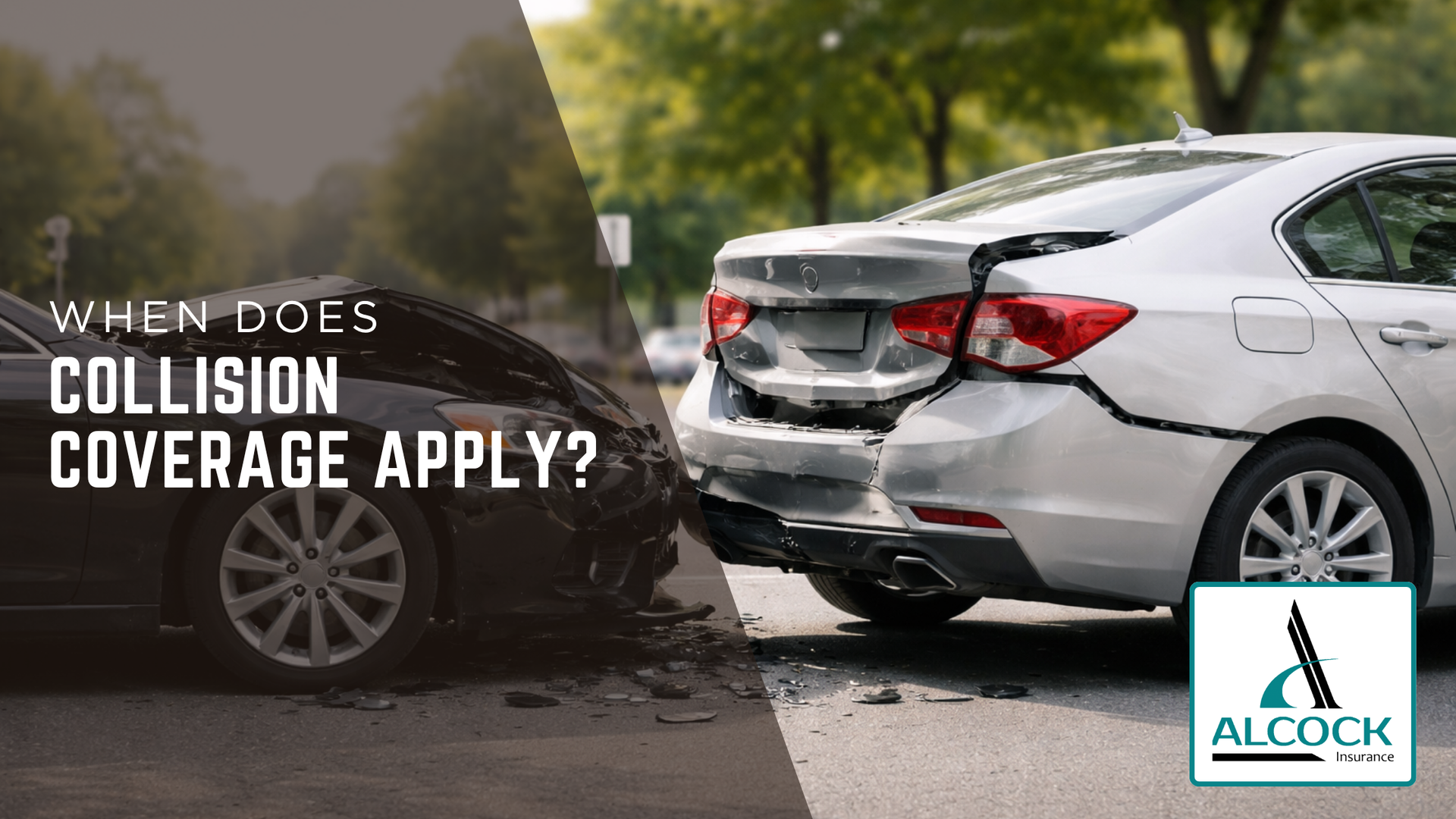
Collision coverage can be one of the most important parts of an auto policy after a crash, but many drivers are not completely sure when it applies or how it differs from other coverage. For drivers in Greenville, NC, understanding these distinctions can make the claims process easier and help prevent surprises after an accident.
What Is Collision Coverage?
Collision coverage is an optional part of
auto insurance that can help pay to repair or replace your own vehicle when it is damaged in a covered collision.
Unlike liability insurance, which generally pays for injuries or property damage you cause to others, collision coverage focuses on damage to the insured vehicle.
It commonly applies when your vehicle:
- Hits another car
- Strikes a guardrail
- Collides with a fence
- Hits a building
- Runs into a utility pole
- Rolls over
Is damaged in certain single-vehicle accidents
The exact coverage depends on the policy, deductible, exclusions, and circumstances of the loss.
Collision Coverage Can Apply Even If You Caused the Accident
One important feature of
collision coverage is that it can potentially respond regardless of who caused the accident.
For example, suppose a driver misjudges a turn and strikes a concrete barrier. There may be no other driver involved, but the vehicle could still suffer significant front-end damage.
If collision coverage is included on the policy, the insurer may help pay for eligible repairs after the deductible is applied.
This makes collision coverage especially valuable for drivers who want protection for their own vehicle even when they are responsible for the crash.
In our work with clients, a common misconception is that
insurance only pays for vehicle damage when another driver is at fault. Collision coverage can protect the insured car in many situations where there is no other party to pursue.
What If Another Driver Causes the Accident?
If another driver is responsible for a crash, that driver's liability insurance may potentially pay for your vehicle damage.
However, you may also have the option to make a claim under your own collision coverage, depending on the circumstances and policy.
Using your own coverage can sometimes allow repairs to begin while the insurers work through questions of fault and reimbursement.
Your collision deductible may initially apply, though the insurer may attempt to recover money from the responsible party or their
insurance company. If recovery is successful, some or all of the deductible may potentially be returned.
The exact process varies from claim to claim.
How Does the Collision Deductible Work?
The deductible is the amount you generally pay toward a covered collision loss before the insurer pays the remaining eligible amount.
For example, if covered repairs cost $5,000 and your collision deductible is $1,000, the insurer may pay $4,000.
Common collision deductibles may include:
Choosing a higher deductible can reduce the premium, but it also means accepting more out-of-pocket expense after a claim.
Drivers should select a deductible they could realistically afford if an accident happened tomorrow.
Does Collision Cover a Single-Vehicle Accident?
Yes, many single-vehicle accidents fall under
collision coverage.
Examples can include losing control on a wet road and hitting a barrier, backing into a post, or rolling the vehicle after leaving the roadway.
A driver traveling near East Carolina University could, for example, strike a curb or fixed object while avoiding another hazard. Even without another vehicle involved, collision coverage may still be relevant.
The important question is whether the damage resulted from a covered collision rather than a non-collision event.
Collision and Comprehensive Coverage Are Different
Collision coverage does not pay for every type of physical damage.
Comprehensive coverage generally applies to certain losses that do not result from a collision with another vehicle or object.
Examples may include:
- Theft
- Vandalism
- Hail
- Falling trees
- Flooding
- Fire
- Animal strikes
For example, if a tree branch falls on a parked car near Town Common, comprehensive coverage would typically be the more relevant protection.
If the driver instead loses control and strikes a tree, collision coverage would generally apply.
Understanding the cause of the damage helps determine which coverage section may respond.
What Happens If the Car Is Totaled?
Collision coverage can also apply when the vehicle is damaged so severely that the insurer declares it a total loss.
A total loss generally occurs when repairing the vehicle is no longer economically practical compared with its pre-loss value and other factors.
The insurer typically determines the vehicle's actual cash value immediately before the accident.
Factors may include:
- Age
- Mileage
- Condition
- Trim level
- Options
- Comparable vehicle prices
If the vehicle is totaled under collision coverage, the settlement is generally based on its actual cash value minus the applicable deductible, subject to policy terms.
The remaining loan balance does not determine the car's value.
What If You Owe More Than the Vehicle Is Worth?
Drivers sometimes owe more on an auto loan than the vehicle's actual cash value.
For example, a vehicle may be worth $20,000 but still have a $24,000 loan balance.
Collision coverage generally pays based on the insured vehicle's covered value, not the amount owed to the lender.
Gap insurance may help address certain differences between the loan or lease balance and the insurance settlement after an eligible total loss.
Anyone financing a newer vehicle should review whether gap coverage is included through the insurer, dealer, lender, or lease agreement.
When Might Collision Coverage Not Pay Much?
If the repair cost is close to or below your deductible, filing a collision claim may result in little or no payment.
For example, if damage costs $1,200 and the deductible is $1,000, the potential insurer payment may be relatively small.
This is one reason collision coverage is often most valuable for larger losses.
Drivers should also understand that routine mechanical breakdowns, wear and tear, or maintenance problems are generally not covered simply because collision coverage exists.
Do You Need Collision Coverage?
Collision coverage is not required in every situation, but lenders and leasing companies often require it while a vehicle is financed or leased.
For an owned vehicle with no loan, the decision often depends on the vehicle's value, the cost of coverage, the deductible, and how difficult it would be to replace the car after a serious accident.
For drivers in Greenville, NC, reviewing the current value of the vehicle and available emergency savings can help determine whether maintaining collision coverage still makes financial sense.
Conclusion
Collision coverage generally applies when your insured vehicle is damaged in a crash with another vehicle or object, including many single-vehicle accidents. It can help whether or not you caused the collision, but the deductible, actual cash value, and policy terms affect how much the insurer may pay. Understanding the difference between collision and comprehensive coverage can also make it easier to know which part of the policy applies after a loss.
At Alcock Insurance, we are committed to offering our clients a wide range of comprehensive and affordable insurance policies. We go above and beyond to ensure that we meet your unique needs with tailored solutions. To find out more about how we can assist you, please reach out to our agency at (252) 353-1700 or
CLICK HERE to request a free, no-obligation quote.
Disclaimer: The content provided in this blog is for informational purposes only and should not be considered professional advice. For personalized guidance, it is important to consult with a qualified insurance agent or professional. They can offer expert advice tailored to your individual situation and help you make well-informed decisions about your insurance coverage.
Alcock Insurance
Greenville, NC
(252) 353-1700
service@alcockins.com
https://www.alcockinsurance.com/