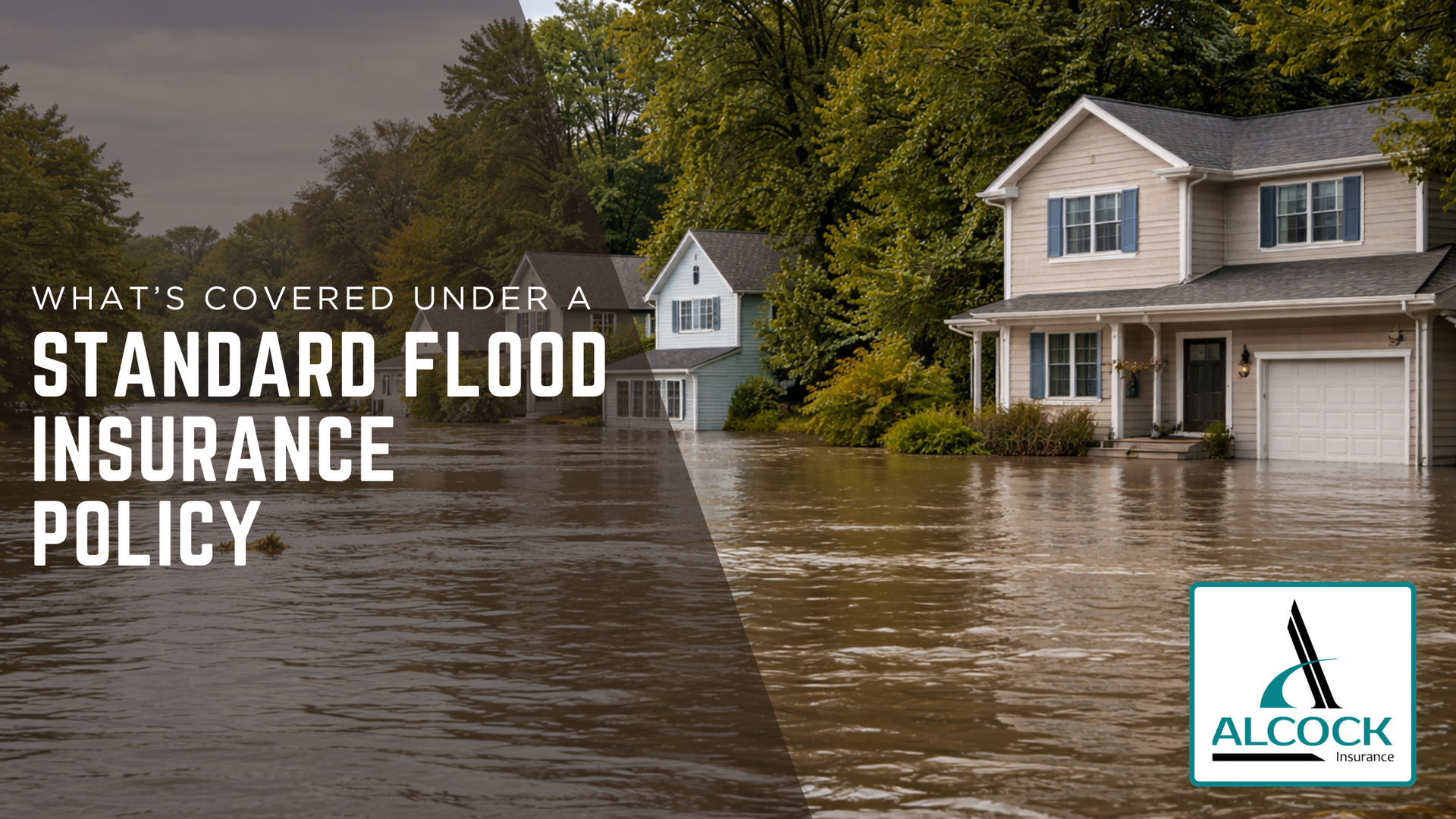

A standard flood insurance policy helps cover damage caused by flooding to your building and certain personal belongings, but it does not cover everything. Understanding what is included—and what is excluded—can help property owners avoid costly surprises after a flood event. In our years of professional service assisting homeowners and business owners in Greenville, NC, we’ve seen that clarity around flood coverage is essential for effective financial protection.
Why Flood Insurance Is Different from Other Property Coverage
Flood damage is specifically excluded from most homeowners, renters, and commercial property insurance policies. Flood insurance exists to fill that gap, but it operates under its own rules, definitions, and coverage limits.
Flooding is generally defined as:
- An overflow of inland or tidal waters
- Rapid accumulation of surface water
- Mudflow caused by water movement
- Collapse of land along a body of water due to erosion
If damage fits this definition, flood insurance—not standard property insurance—applies.
The Two Main Parts of Flood Insurance Coverage
Flood insurance policies separate coverage into building coverage and contents coverage. These are distinct and must be selected intentionally.
Building Coverage: What It Protects
Building coverage applies to the structure itself and typically includes:
- Foundation walls and anchoring systems
- Electrical and plumbing systems
- HVAC equipment
- Water heaters and permanently installed appliances
- Built-in cabinets and paneling
This coverage helps pay for repairs or rebuilding after flood-related structural damage.
Contents Coverage: What’s Inside the Building
Contents coverage protects certain personal or business property within the insured structure, such as:
- Furniture
- Clothing
- Electronics
- Portable appliances
Contents coverage is optional and has its own coverage limit separate from the building.
Replacement Cost vs. Actual Cash Value
How flood claims are paid depends on the type of property and coverage.
Replacement Cost Coverage
Replacement cost pays what it takes to repair or replace damaged property without deducting for depreciation. This typically applies to:
- Primary residences
- Certain structural components
Actual Cash Value Coverage
Actual cash value deducts depreciation based on age and condition and commonly applies to:
- Personal property
- Non-primary residences
This distinction can significantly impact claim payouts.
What Flood Insurance Typically Covers
Standard flood insurance policies commonly cover damage caused by:
- Rising water from storms or heavy rainfall
- Overflowing rivers, streams, or drainage systems
- Storm surge and inland flooding
Covered losses must be directly caused by flood conditions as defined in the policy.
What Flood Insurance Does NOT Cover
Flood insurance has important exclusions.
Common Exclusions
Flood policies generally do not cover:
- Damage caused by moisture, mildew, or mold not directly linked to flooding
- Currency, precious metals, and valuable papers
- Temporary living expenses or loss of use
- Landscaping, pools, and decks
- Vehicles
Understanding these exclusions helps set realistic expectations.
Basement and Ground-Level Limitations
Coverage is more limited in basements and enclosed ground-level areas.
Items Often Restricted
Flood insurance may limit or exclude coverage for:
- Finished flooring
- Wall coverings
- Personal belongings stored below ground level
Structural elements are usually covered, but cosmetic finishes often are not.
Coverage Limits and Why They Matter
Flood insurance policies have maximum coverage limits that cap claim payouts.
Why Limits Are Important
If rebuilding costs or property values exceed policy limits:
- The difference must be paid out of pocket
- Claims may fall short of full recovery
Higher-value properties may need additional strategies to manage this gap.
Deductibles and Their Impact on Claims
Flood insurance deductibles reduce the amount paid on a claim.
Key Deductible Considerations
- Separate deductibles may apply to building and contents
- Higher deductibles lower premiums but increase out-of-pocket costs
- Deductibles apply per claim, not per year
Choosing the right deductible balances affordability and risk tolerance.
Flood Insurance for Businesses
Commercial flood insurance follows similar rules but applies to business property.
Business Property Coverage
Flood insurance for businesses may cover:
- Commercial buildings
- Inventory and equipment
- Fixtures and machinery
Business interruption losses are not typically included and require separate planning.
Flood Risk and Property Realities
Flood exposure is influenced by geography, drainage systems, and development patterns.
Properties near the Tar River, low-lying commercial corridors, or established neighborhoods surrounding Uptown often face varying degrees of flood exposure. These conditions frequently prompt property owners to closely review flood coverage options and limits in Greenville, NC.
Common Misunderstandings About Flood Insurance
Many policyholders assume coverage is broader than it is.
Misconceptions We Often See
- “Flood insurance covers all water damage”
- “Contents are automatically included”
- “Coverage limits don’t matter unless the building is destroyed”
These misunderstandings can lead to unexpected financial strain after a flood.
When to Review Your Flood Insurance Coverage
Flood insurance should be reviewed regularly.
Good Times to Reassess Coverage
- After renovations or improvements
- When purchasing high-value belongings
- If flood maps or risk classifications change
- At policy renewal
Periodic reviews help ensure coverage keeps pace with real-world costs.
Being Informed Is the First Step to Being Protected
Flood insurance plays a critical role in protecting property, but only when policyholders understand what is—and isn’t—covered. Knowing these details allows you to plan effectively and reduce financial risk before flooding occurs.
At Alcock Insurance, we are committed to offering our clients a wide range of comprehensive and affordable insurance policies. We go above and beyond to ensure that we meet your unique needs with tailored solutions. To find out more about how we can assist you, please reach out to our agency at (252) 353-1700 or CLICK HERE to request a free, no-obligation quote.
Alcock Insurance
Address: Greenville, NC
Phone: (252) 353-1700
Website: https://www.alcockinsurance.com/